
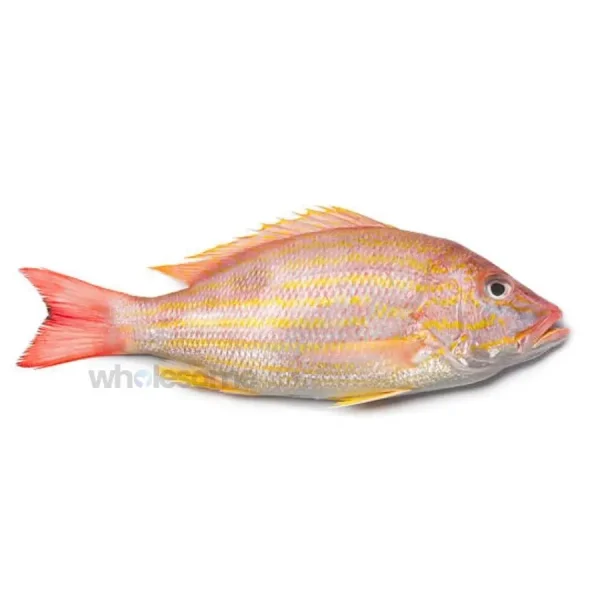
Red Snapper (Kanalcha)
₨ 1,340
The real Red Snapper is Kanalcha (Lutjanus campechanus), a vibrant, reddish-pink fish known for its firm, meaty texture. In Pakistan, however, Heera is mistakenly referred to as Red Snapper. Heera is actually the Golden Snapper (Lutjanus johnii), which is lighter in color with a golden or yellowish hue. Kanalcha is cheaper than Heera, yet many sellers market Kanalcha under the name of Heera to fetch a higher price. Kanalcha offers a robust, mildly sweet flavor, perfect for grilling, baking, or pan-frying, whereas Heera (Golden Snapper) has a more delicate taste with a slightly different texture.
- Please Note: We always aim to deliver the freshest seafish available. However, due to market conditions, there may be times when certain varieties are unavailable. If this happens, we will promptly inform you and offer suitable alternatives or arrange a new delivery time that works for you.
- Please Note: The price of seafish is based on its weight before any cleaning or cutting. The final delivered weight may be slightly less than the initial weight due to cleaning and cutting processes, as certain cuts may result in more wastage than others.
Introduction
The real Red Snapper is Kanalcha (Lutjanus campechanus), a vibrant, reddish-pink fish known for its firm, meaty texture. In Pakistan, however, Heera is mistakenly referred to as Red Snapper. Heera is actually the Golden Snapper (Lutjanus johnii), which is lighter in color with a golden or yellowish hue. Kanalcha is cheaper than Heera, yet many sellers market Kanalcha under the name of Heera to fetch a higher price. Kanalcha offers a robust, mildly sweet flavor, perfect for grilling, baking, or pan-frying, whereas Heera (Golden Snapper) has a more delicate taste with a slightly different texture.. However, to clarify:
-
Kanalcha (کینلچہ): Refers to the true Red Snapper (Lutjanus campechanus).
-
Heera (ہیرہ): Refers to the Gold Snapper (Lutjanus johnii).
At Gwadarseafood, we ensure that our Kanalcha is accurately identified and sourced, providing you with the authentic Red Snapper experience.
Deep Dive: Habitat, Diet & Growth
Habitat
Red Snapper (Lutjanus campechanus) is native to the Western Atlantic Ocean, the Gulf of Mexico, and the Caribbean Sea. These fish inhabit depths ranging from 30 to 200 meters, often found near reefs and rocky bottoms. They are carnivorous, preying on smaller fish, crustaceans, and cephalopods.
In Pakistan, Red Snapper is found in the deep waters off the coasts of Karachi and Balochistan. Fishermen employ sustainable methods such as handlines and longlines to catch these fish.
Diet
Red Snapper are opportunistic feeders that consume a variety of prey, including fish, benthic crustaceans, squids, and pelagic zooplankton. Juvenile diets are composed primarily of shrimp and other crustaceans; adults feed on fishes, squid, pelagic zooplankton, and other benthic crustaceans.
Growth
Red Snapper exhibit different life history characteristics depending on the region. They are known to reach sexual maturity at two to five years old and can live for more than 50 years. In the coastal waters of northern Australia, females reached first maturity between 54.9 and 69.0 cm FL, and between 6 and 9 years.
Concise Addition: Spawning & Conservation
Red Snapper spawns during warmer months, releasing millions of eggs that drift in surface currents. Overfishing has been a concern for Red Snapper populations, particularly in the Gulf of Mexico and Atlantic regions. Fisheries management practices are in place to maintain sustainable fishing levels. The IUCN currently lists Red Snapper as a species of “Vulnerable” (VU) status, highlighting the importance of responsible sourcing and sustainable catch method
Names & Taxonomy
-
Common Name: Red Snapper
-
Local Name in Pakistan: Kanalcha (کینلچہ)
-
Scientific Name: Lutjanus campechanus
-
Family: Lutjanidae
-
Order: Perciformes
-
Class: Actinopterygii
Sourcing & Catching Method
All Red Snapper sold by Gwadarseafood is wild-caught in the deep waters of the Arabian Sea, primarily off the coasts of Karachi and Balochistan. Local fishermen use sustainable methods, including handlines and longlines, to catch the fish. After being caught, the fish is immediately chilled to maintain freshness. The fish is processed within hours of landing to ensure the highest quality and flavor.
Physical Traits & Texture
-
Skin Color: Deep rosy red along the back, fading to a lighter pinkish-red on the belly.
-
Flesh: Firm, moist, and slightly sweet in flavor.
-
Texture: Dense and flaky, making it ideal for various cooking methods.
Cutting Options & Yields
| Option | Approx. Yield | Best For |
|---|---|---|
| Whole (uncleaned) | ~100% | Whole roasts or bulk processing |
| Gutted only | ~75–78% | Curry-style cuts |
| Headless & Gutted | ~65% | Large steak and fillet production |
| Steaks (bone-in) | ~68–70% | Grilling, pan-frying |
| Boneless fillets | ~45–48% | BBQ, oven-bake, sushi-grade use |
Cooking Ideas – Versatile, Rich & Crowd-Friendly
-
Grilled Red Snapper: Marinate with olive oil, lemon, garlic, and herbs, then grill for a smoky flavor.
-
Pakistani Masala Red Snapper: Simmer chunks in a spicy tomato-onion gravy with whole spices.
-
Red Snapper Salad: Flake grilled Red Snapper into a fresh salad with mixed greens and a tangy dressing.
-
Oven-Baked Red Snapper: Roast with rosemary, thyme, and garlic for a simple yet flavorful dish.
-
Red Snapper Sashimi: For sushi enthusiasts, fresh cuts of Red Snapper offer an exquisite raw dish.
Tips for Selecting Fresh Red Snapper (Kanalcha)
-
Flesh Color: Fresh Red Snapper should have bright red or pinkish flesh, with no signs of browning or dullness.
-
Smell: Look for a mild ocean scent. A strong fishy odor indicates the fish may not be fresh.
-
Skin: The skin should be smooth, shiny, and free of blemishes.
-
Eyes: Clear, bright eyes are a good indicator of freshness.
Tips for Storing Red Snapper
-
Refrigeration: Store at 0–4°C and consume within 1–2 days for the best taste and texture.
-
Freezing: To extend freshness, freeze Red Snapper in airtight or vacuum-sealed packaging. Best used within 1–2 months.
-
Avoid Thawing and Refreezing: Repeated thawing and refreezing can negatively impact the quality of the fish.
Nutrition Highlights (per 100 g raw flesh)
-
Protein: ~20–22 g
-
Fat: ~3.5 g
-
Carbohydrates: 0 g
-
Sodium: ~45 mg
-
Omega-3 Fatty Acids: ~0.5 g
-
Calories: ~120 kcal
-
Vitamin D: ~5.0 µg
-
Vitamin B-12: ~2.0 µg
-
Calcium: ~20 mg
-
Iron: ~1.2 mg
Red Snapper is an excellent source of high-quality protein, essential fats, and vitamins, making it a healthy addition to your diet.
| Cutting Options | Bite-Sized Boneless Finger Pieces, Boneless Biscuits, Boneless Fillet (2 fillet per fish), Boneless Fillet (2 fillet per fish) Butterfly Cut (best for grill), Headless & Gutted, Sliced with Skin & Center Bone, Whole & Gutted, Whole & Uncleaned |
|---|
Related products
-
Sea Water Fish
Bhetki (Daangri)
₨ 1,690 Select options This product has multiple variants. The options may be chosen on the product page -
Sea Water Fish
Lady Fish (Bhambore)
₨ 1,290 Select options This product has multiple variants. The options may be chosen on the product page -
Sea Water Fish
Grouper (Ghissar)
₨ 1,570 Select options This product has multiple variants. The options may be chosen on the product page -
Sea Water Fish
White Barracuda (Safaid Kund)
₨ 1,490 Select options This product has multiple variants. The options may be chosen on the product page
Reviews
There are no reviews yet.