
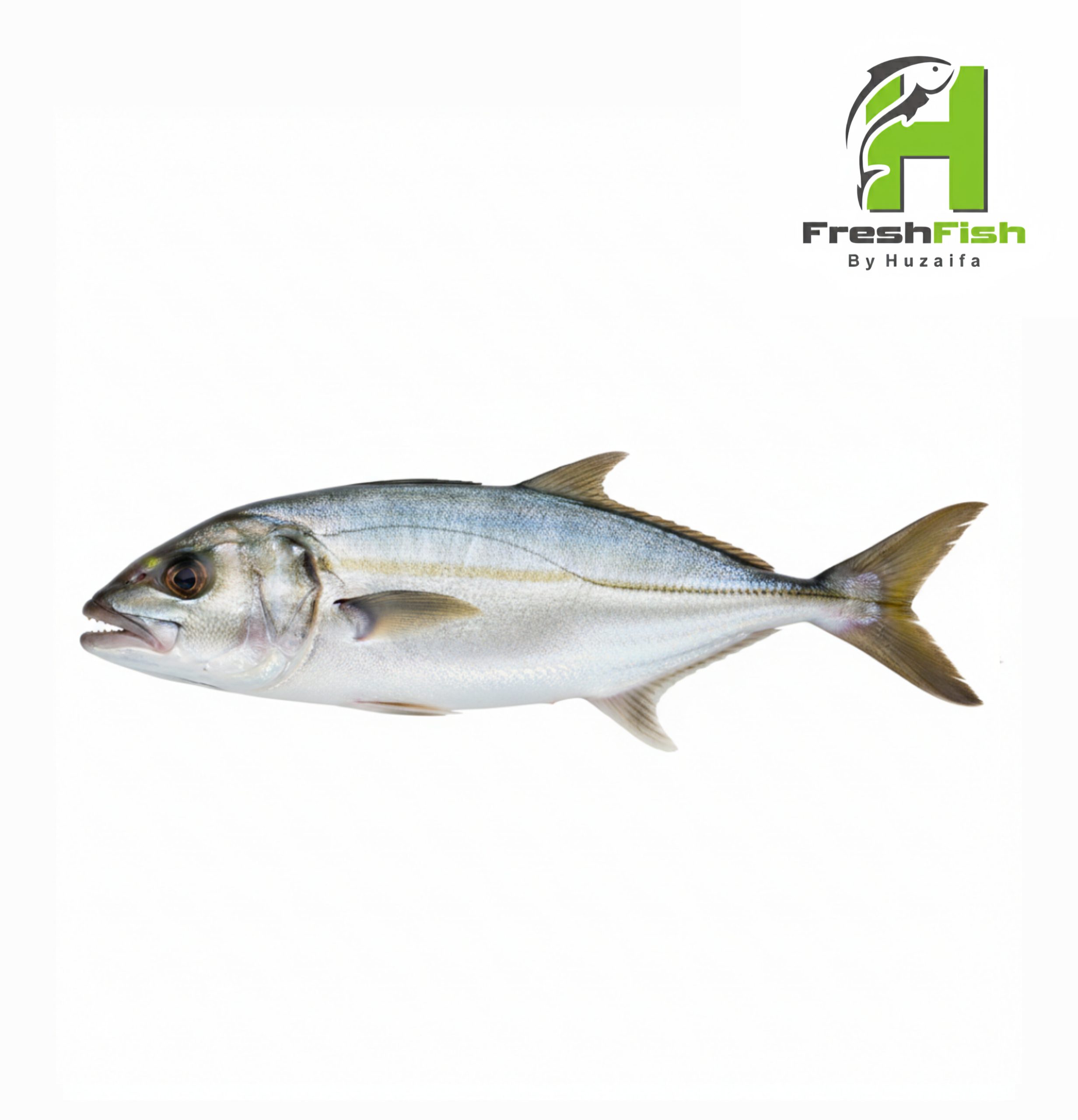
Amberjack (Saafi)
₨ 950
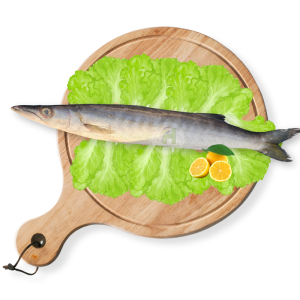
Amberjack, locally known as “Saafi,” is a saltwater fish with medium to dark meat, offering a bold and distinctive flavor that seafood enthusiasts appreciate. Commonly found in warmer waters like the Arabian Sea, it has a firm texture that holds well in grilling, frying, or BBQ recipes.
- Please Note: We always aim to deliver the freshest seafish available. However, due to market conditions, there may be times when certain varieties are unavailable. If this happens, we will promptly inform you and offer suitable alternatives or arrange a new delivery time that works for you.
- Please Note: The price of seafish is based on its weight before any cleaning or cutting. The final delivered weight may be slightly less than the initial weight due to cleaning and cutting processes, as certain cuts may result in more wastage than others.
Introduction
The Greater Amberjack, known scientifically as Seriola dumerili, is a formidable predatory fish belonging to the Carangidae family. Characterized by its streamlined, fusiform body and distinctive amber-colored stripe along its side, this species is renowned for its agility and strength. It inhabits temperate and tropical waters worldwide, often associated with deep reefs, drop-offs, and wrecks. The Greater Amberjack is a prized catch in both commercial and recreational fisheries due to its challenging fight and delectable, firm-textured meat.
Ecological Role in the Ocean
Amberjacks are apex predators in their habitat, feeding on a diverse diet that includes squid, crustaceans, and smaller fish such as sardines and scads. Their presence helps regulate the populations of these species, ensuring a balanced ecosystem. Juvenile Amberjacks often seek refuge near floating objects or sargassum mats, while adults prefer deeper waters, typically ranging from 18 to 72 meters, and can be found around reefs, drop-offs, and shipwrecks.
Habitat, Behavior & Diet
-
Habitat: The Greater Amberjack is typically found in offshore waters, preferring deep reefs, drop-offs, and wrecks. Juveniles often inhabit coastal areas and are associated with floating objects like Sargassum mats. As they mature, they move to deeper waters, usually at depths ranging from 18 to 72 meters, though larger individuals can be found at depths up to 360 meters.
-
Behavior: These fish are known for their strength and speed, making them formidable predators and challenging targets for anglers. They often hunt in schools, coordinating their movements to herd and capture prey efficiently.
-
Diet: Amberjacks are opportunistic feeders, preying on a variety of smaller fish species, including bigeye scad and sardines, as well as cephalopods and crustaceans. Their diet varies depending on the availability of prey in their habitat.
Reproduction & Conservation
-
Reproduction: Amberjacks are gonochoric, meaning individuals are distinctly male or female from birth. They reach sexual maturity at approximately 3 to 4 years of age. Spawning occurs primarily from March to June, with females capable of releasing between 18 and 59 million eggs during a single spawning season.
-
Conservation Status: The IUCN Red List classifies the Amberjack as “Least Concern,” indicating a stable population. However, in certain regions like the Gulf of Mexico, overfishing has led to the stock being overfished, prompting the implementation of rebuilding plans۔
Physical Traits & Texture
-
Shape: Amberjacks possess a robust, torpedo-shaped body designed for speed and agility. Their coloration includes a bluish-grey back, silvery-white belly, and a distinctive amber stripe along the side.
-
Flesh: The meat of the Amberjack is firm, white, and slightly oily, offering a rich flavor that is highly regarded in culinary circles. It holds up well to various cooking methods, including grilling, baking, and broiling.
-
Bones: Amberjacks have a complex bone structure that can pose challenges during filleting. The bones are dense and may be difficult to remove entirely, requiring careful attention to avoid injury. Injuries from handling Amberjacks, such as puncture wounds from their sharp fins, can lead to infections if not properly treated .
Size Options
-
Small: 2–5 kg (ideal for grilling or pan-searing).
-
Medium: 5–10 kg (suitable for steaks or baking).
-
Large: 10 kg+ (perfect for whole roasting or large gatherings).
Cutting Options & Approximate Yields
| Cut Style | Approx. Yield | Ideal Use |
|---|---|---|
| Whole (uncleaned) | 100% | Whole roasting or grilling |
| Gutted | 85% | Steaks or fillets |
| Headless & Gutted | 75% | Slices or fillets |
| Boneless Fillets | 45% | Grilling, pan-searing, or baking |
Cooking Ideas – Light, Healthy & Flavorful
-
Grilled Amberjack Steaks: Marinate with olive oil, lemon juice, garlic, and herbs. Grill over medium heat for 4–5 minutes per side to achieve a crispy exterior.
-
Baked Amberjack with Asparagus: Place Amberjack fillets on a baking sheet with asparagus. Drizzle with olive oil, season with salt and pepper, and bake at 180°C (350°F) for 15–20 minutes.
-
Amberjack Fish Tacos: Season grilled Amberjack with taco spices, flake the fish, and serve in soft tortillas with slaw and salsa for a fresh, flavorful dish.
-
Pan-Seared Amberjack with Garlic Butter: Sear Amberjack fillets in a hot pan with butter and garlic until golden brown and cooked through.
Tips for Selecting Fresh Amberjack
-
Eyes: Clear and bright, not cloudy.
-
Flesh: Firm and slightly elastic to the touch, not mushy.
-
Smell: Fresh, ocean-like scent; avoid fishy or sour odors.
-
Skin: Smooth and shiny, with no discoloration or dryness.
Storage Tips
-
Refrigeration: Keep at temperatures below 4°C (40°F) and consume within 1–2 days.
-
Freezing: Store in airtight packaging for up to 3 months.
-
Thawing: Thaw in the refrigerator overnight; avoid thawing at room temperature.
Nutrition Highlights (Approx. per 100g, raw)
| Nutrient | Amount |
|---|---|
| Calories | 146 kcal |
| Protein | 23.1 g |
| Total Fat | 5.24 g |
| Saturated Fat | 1.28 g |
| Cholesterol | 55 mg |
| Sodium | 39 mg |
| Carbohydrates | 0 g |
| Sugars | 0 g |
| Dietary Fiber | 0 g |
| Omega-3 | 0.238 g |
| Calcium | 15 mg |
| Iron | 0.641 mg |
| Potassium | 952.4 mg |
Source: NOAA Fisheries
Key Nutritional Insights:
-
High-Quality Protein: Amberjack provides a substantial amount of protein per serving, essential for muscle repair and overall body function.
-
Lean Meat: With only 5.24 g of total fat and 1.28 g of saturated fat, Amberjack is considered a lean fish, making it suitable for low-fat diets.
-
Omega-3 Fatty Acids: Contains 0.238 g of omega-3 fatty acids per 100g, contributing to heart health and cognitive function.
-
Mineral Content: Provides essential minerals like calcium (15 mg), iron (0.641 mg), and potassium (952.4 mg), supporting bone health, oxygen transport, and cellular function.
-
Low in Carbohydrates: Amberjack contains 0 g of carbohydrates, making it suitable for ketogenic and low-carb diets.
| Cutting Options | Bite-Sized Boneless Finger Pieces, Boneless Biscuits, Boneless Fillet (2 fillet per fish), Custom Cutting (Contact Us), Headless & Gutted, Whole & Gutted, Whole & Uncleaned |
|---|
Related products
-
Sea Water Fish
Bengal Corvina (Goli Mushka)
₨ 1,390 Select options This product has multiple variants. The options may be chosen on the product page -
Sea Water Fish
Catfish (Khagga)
₨ 670 Select options This product has multiple variants. The options may be chosen on the product page -
Sea Water Fish
Mullet Fish (Boi)
₨ 830 Select options This product has multiple variants. The options may be chosen on the product page -
Sea Water Fish
Pickhandle Barracuda (Safaid Kund)
₨ 1,490 Select options This product has multiple variants. The options may be chosen on the product page
Reviews
There are no reviews yet.